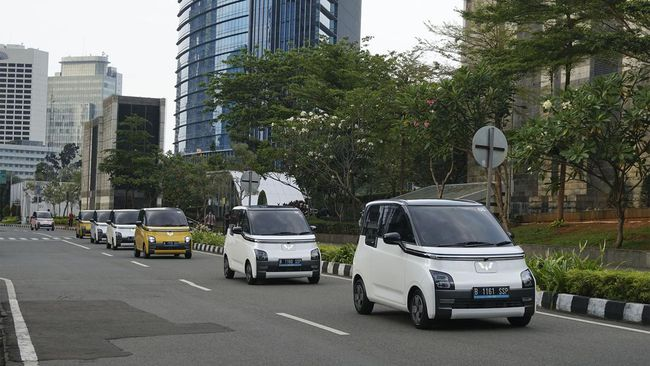
Spasi- id, The development of electrical technology to the Advanced Transport Era has become one of the most important landmarks in the transformation of the global auto industry. In the last decade, electric cars have grown rapidly, both in terms of technological innovation, government policy, and the acceptance of world society towards green vehicles.
Global Growth and Adoption
Since the introduction of modern electric cars in mass in the early 20100s, their popularity continues to increase. The data from the International Energy Agency (IEA) shows that by 2024, the number of electric cars operating around the world has gone beyond 40 million units, increasing almost tenfold compared to five years earlier.
Countries like China, the United States and the European countries It became the largest market for electric vehicles, driven by incentive policies, purchasing subsidies, and massive infrastructure loading.
Innovation Technology and Infrastructure Advanced Transport
The progress of battery technology becomes a major factor in the development of electric cars. Automatic producers are now racing to develop larger-capacity batteries, shorter charging time, and longer life. Technology Solid- State Battery Predictable to be the next major breakthrough, because it offers higher energy efficiency and better security than conventional lithium-ion batteries.
Besides, construction power charging station network (charging station) It's also expanding in different countries. In Europe, the European Union targeted the installation of over a million public charging points in 2030. Meanwhile, in the United States, the federal government has launched a major funding program to support the accelerating ecosystem of national electric vehicles.
Government Policy and Environmental Comitments
The strong urge towards electric vehicles is also not off the policy of government focusing on reducing carbon emissions. Many countries have set targets to stop selling fossil fuel vehicles in the coming decades. For example, England plans to ban the sale of new gas cars and diesel in 2035, while Norway even targets 2025.
This move is in line with global commitment to The Paris Treaty and a clean energy transition agenda, where the transport sector becomes one of the major contributors of world carbon emissions.
The challenge that's still facing
Despite significant growth, electrical cars are still developing a number of challenges. The prices of relatively high vehicles, the limitations of infrastructure in the developing world, and the availability of battery raw materials such as lithium and coalt became an important issue that needed to be overcome.
Moreover, the battery recycling process is also the primary concern, so the environmental impact of electronic waste can be minimized.
Conclusion
The world's electric car development shows a positive direction towards a cleaner and more sustainable transportation system. The collaboration between government, auto industry, and society became the key to accelerating this transition. With the right support for innovation and policy, electric vehicles are potentially the backbone of future mobility, as well as the real solution in facing the challenges of global climate change.
follow our instagram @ spati.legal