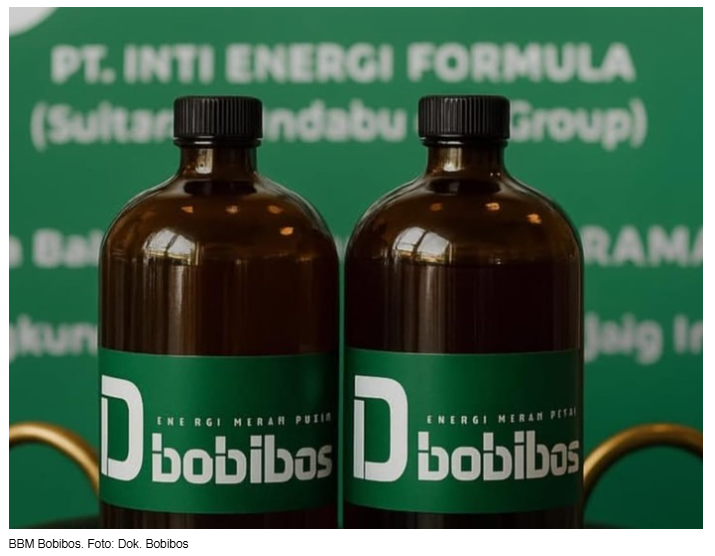
Space-id — Indonesia re-notes important innovation in renewable energy fields. Is M. Ikhlas Thamrin, Indonesian independent researcher, who successfully created Bobibos, high-octane fuel produced from agricultural waste, particularly rice straw. The findings attract public attention after being introduced through a series of open trials and discussions with various green energy related parties.
Bobibos claimed to have Research Octane Number 98, equivalent to high-octane premium gasoline on the market. But the main advantage lies in The materials are abundant and His environmental production process., so that it is rated potentially to be implemented in rural Indonesia.
Departure of Environment and Energy Crisis
Ikhlas Thamrin has been following alternative energy research since 2007. He saw two major problems in Indonesia that needed to be thought about: dependency on fossil fuels as well Air pollution due to burning straw waste It happens every harvest.
"The straw is always considered waste, whereas the energy in it is tremendous when it is parsed and properly processed," the exam is in an renewable energy discussion forum.
Simple Production Technology, Great Potential
Bobibos produced through the process of thermochemical reactions and biomass destilation, turning dry hay into liquid fuel. The machine the Ikhlas designed tends to be simple so it can be replicated by the scale of the village.
Limited testing results show Bobibos had some edge:
- RON 98 +
- Lower emission than fossil-based fuels
- The raw materials are cheap and easy to get
- Production process can be done on a small scale
Some of the auto communities in West Java did a performance test, as early results showed that machines remained stable and responsive.
Tim and Institute involved in Bobibos Development
Although known as the primary inventor, the Ikhlas do not work alone. Bobibos development involves collaboration of a number of parties, both formal and informal.
1. Independent Research Team
Ikhlas worked with a small team made up of:
- Local engineer
- Field lab assistant.
- Independent chemical consultant
They support the creation of reactor tools to test the fuel formula.
2. West Java Otomotive Community
To test the real performance on the vehicle, Bobibos was tested by:
- Bikers community
- The test workshop group
- Local auto research worker
The input of this community helps perfect formulas and burning standards.
3. The State Government in Centra Agriculture
Persons role in:
- The provision of land and straw waste
- Coordinate with farmers
- Enforcement for UMKM biomass energy
This collaboration is important because bobibos use raw materials that rely heavily on the eye of the farm chain.
Four. The academic and energy expert.
Some of the professors and biomakers from the West Java and Central Java are giving informal technical guidance, especially related to standardized, quality analysis, to the repair advice of the test method.
5. The Ministry and State Institute
Although it has not entered the certification stage, some government agencies show interest:
- ESDM Ministry — octane test, emissions and fuel quality
- BRIN — Advanced research potential
- The Ministry of Agriculture — Straw waste utilization
- BPH Migas — regulatory and permit potential
Bobibos are headed for the national validation stage if it meets the entire lab procedure and machine security.
Six. Local Farmers Group
As the purveyor of raw materials, farmers in different areas became an important part of the Bobibos ecosystem. They are also involved in:
- Small-scale production engine test
- Harvest waste management
- Formation of the straw supply chain
This makes Bobibos a community-based energy model.society -based energy).
Great potential for Indonesian Energy Transition
If passed the national certification test and could be mass produced, Bobibos could be:
- renewable energy sources are high economic
- Straw waste reduction solution
- Alternate low fuel emissions
- Local energy innovations supporting national energy resistance.
Bobibos is now seen as one of the most promising local innovations in the green energy sector. The progress ahead is highly anticipated by governments, academics, and vast societies.